
New London County Released Photo Records
A mugshot is a booking or intake photograph made by an arresting or custody agency. The image record is separate from the release record. A person can be released on bond, discharged by a court, transferred, paroled, or complete a sentence without any photo becoming available online. Likewise, an image does not prove that the person is still in custody or that the case ended in conviction.
Connecticut’s public-record baseline appears in Freedom of Information Act Chapter 14. Section 1-210 generally makes nonexempt agency records open to inspection or copying, while Section 1-212 addresses copies and fees. Those general rights are subject to law-enforcement, privacy, juvenile, youthful-offender, sealed, erased, and other limits.
Arrest photographs have a narrower access boundary than basic blotter facts. Connecticut’s Section 1-215 and the state Supreme Court access line distinguish core arrest information from a rule that would force routine release of every mugshot. The correct statement is that a specific photo may be requested and may be disclosed, not that every New London County booking photo is public on demand.
Find New London County Released Mugshots
Start with the agency that likely made or maintains the image. New London County does not supply a county sheriff feed, so channels common elsewhere do not exist here. CT DOC may display an offender photo for some public records, but the research did not confirm that every current or released result carries one. The display must be checked person by person.
| Channel | Photo availability | How to access |
|---|---|---|
| New London sheriff roster or app | None found | No county jail roster, release feed, or confirmed sheriff app exists |
| CT DOC offender record | Possible, not confirmed for every record | Use the official CT DOC search and rely only on what the live result displays |
| Agency records request | Possible, subject to law | Ask the municipal police department, CT DOC, or other image custodian |
| DESPP sex offender registry | Possible for qualifying registrants | Use only to confirm registry information, not as a general released-person list |
| VINELink | Not a dependable photo archive | Use for custody status and alerts, not to promise an image |
| Agency or news release | Case-specific | May contain a published image, but is not comprehensive release proof |
| Third-party publisher | May display copied material | Treat as unofficial and verify all facts at the originating agency |
The Connecticut sex offender registry is limited to people required to register. It can contain public descriptors and registry information after release, but it is not a broad mugshot search. Federal records are different again. The U.S. Marshals Service says it does not release prisoner photographs, personal histories, or arrival and departure times to the public.
Note: If the live CT DOC record shows no photo, do not treat that absence as proof that no agency image exists.
No New London County Sheriff Photo Feed
The absence of a sheriff app is a central New London County finding. Connecticut unified county jails and state prisons under CT DOC. There is no county sheriff jail to maintain a public roster, no “released today” photo list, and no confirmed mobile jail app carrying New London County mugshots. Searching for such a feed can lead to unrelated or unofficial pages.
Corrigan Correctional Center is the closest male county-custody analogue because it serves New London and Norwich courts and holds both pretrial and sentenced people. York Correctional Institution is the statewide women’s facility in Niantic. Both are state sites. Their official facility pages carry facility images and operational information, not a county gallery of released people.
The Released Last 24 Hours page explains the same structural gap for release lists. For a specific photo, identify whether municipal police, CT DOC, or another agency created it. For release status, use CT DOC, CT SAVIN / VINELink, and the Judicial Branch record.
Request New London County Booking Photos
A focused public-record request is the strongest official route when no image is displayed. First identify the custodian. A municipal arrest photo may remain with the police department. A CT DOC intake image may be maintained by DOC. A court-related hold does not create a public county lockup gallery, and the clerk may hold case papers rather than the custody photo.
- Name the person and provide date of birth, DOC number, arresting agency, facility, and approximate custody date when known.
- Ask for the specific “booking photograph” or “intake photograph,” not the entire arrest or inmate file.
- Cite Connecticut FOIA Sections 1-210 and 1-212 as the general access and copy framework.
- Ask whether inspection is available and what copy, scanning, certification, media, or computer-record fees apply.
- If denied, request the legal basis for withholding and the process for narrowing or correcting the request.
For CT DOC, the research identifies the Public Information Office at 24 Wolcott Hill Road, Wethersfield, CT 06109, phone (860) 692-7780, during its published weekday hours. A request should accept that active-case limits, statutory exemptions, erasure, juvenile or youthful-offender rules, and privacy law may block disclosure. No turnaround should be promised because the source material supplies no universal response period for a photo request.
The manifest includes an official FOI fee page matched to this subject. Review the state copy and scanning guidance before requesting a paid copy.
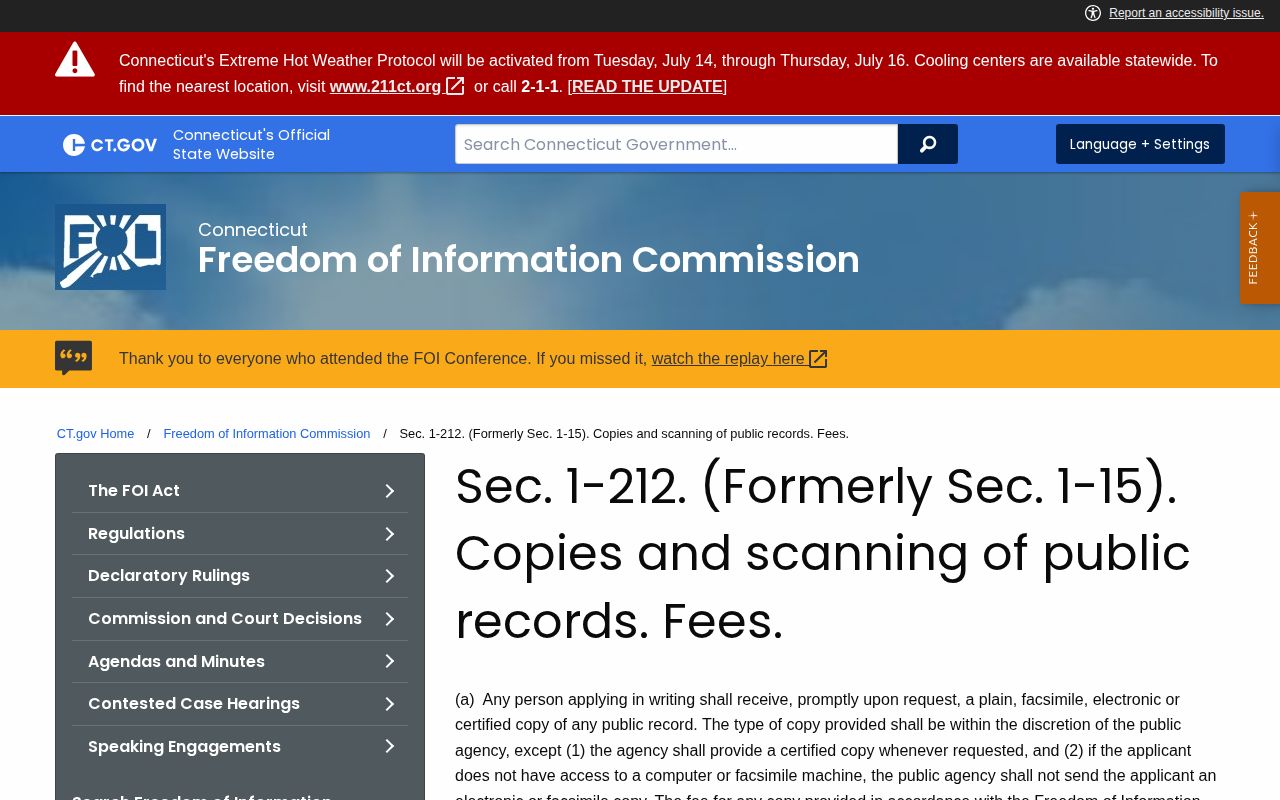
The source shows why a requester should ask the actual custodian about record format and lawful fees rather than assume every image is free.
Unofficial New London County Mugshot Sources
Commercial aggregators can copy an arrest photo, and news outlets can publish an image in a high-profile arrest, escape, or investigation. Neither category is a complete New London County release record. A copied image can remain online long after custody changes, a case is corrected, or a court record is erased. No commercial mugshot publisher is linked here.
Official facts control when sources conflict. Use the court docket for disposition, CT DOC for state custody, and the image-owning agency for the photograph. News is useful only for the event it reports. It cannot stand in for a daily roster, and the presence of an old photo cannot show whether a person is on parole, probation, in another jurisdiction, or fully discharged.
If an unofficial publisher shows wrong details, keep a copy of the disputed claim, collect the corrected agency or court record, and use the publisher’s own correction process. Do not send money based on an assumption that state law guarantees paid removal. The research confirmed no Connecticut-specific anti-pay-to-remove statute.
New London County Mugshot Erasure Effects
Connecticut Clean Slate and cannabis-erasure programs can remove certain conviction records from public view, while other matters require a petition. Judicial Branch search results also warn that records can change because of erasures, corrections, pardons, and other modifications. That can explain why a case once visible through a New London or Norwich lookup later disappears.
Erasure of a court record and removal of every copied image are not the same act. Ask the court or agency to correct the underlying official record first. Then give the official correction or erasure documentation to any publisher that still controls a copy. The agency may also explain whether its own public display can or must change. No blanket promise of removal is supported.
The official Connecticut Clean Slate portal is the proper starting point for current state program information.
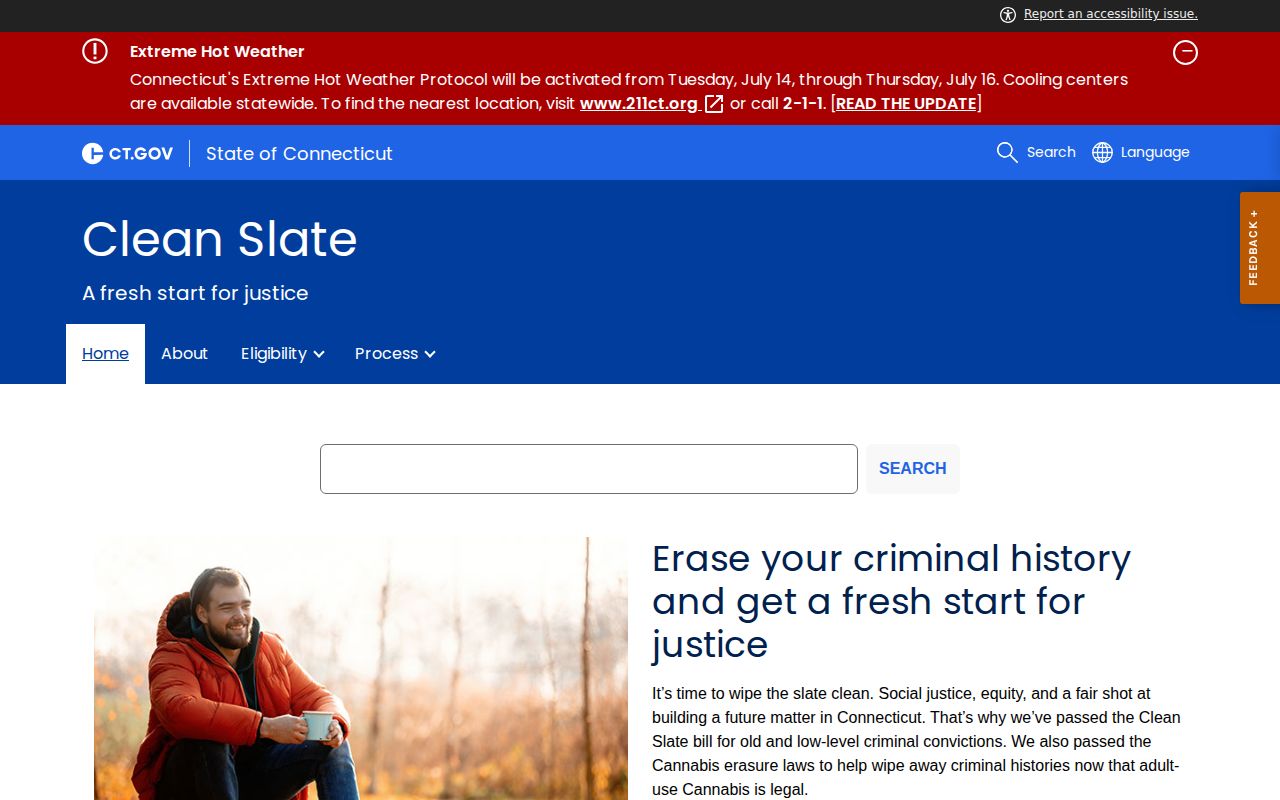
The portal connects lost public visibility to a lawful erasure process, not to proof that a release record or image never existed.
Note: A missing case, missing photo, and completed release are three different facts and should be verified through their owning agencies.
Connecticut Mugshot Access Limits
Connecticut’s distinctive rule is a boundary, not a confirmed photo source. Basic arrest information has stronger public access footing than a booking image. The state Supreme Court access line is commonly summarized as requiring blotter-style facts and a narrative-type record without automatically requiring mugshots in the same way. That distinction must shape every request.
Ask for the photo, but expect a record-by-record answer. The custodian may release it, cite an exemption, say it is not maintained, or explain that an erasure or restricted status applies. A requester can ask for the written legal basis and may narrow the request. Still, no page or agency search should be described as a guaranteed mugshot channel.
Custody type matters too. A municipal police photograph, a CT DOC intake image, and a federal prisoner photograph follow different agency rules. The U.S. Marshals Service public guidance does not offer federal prisoner photographs or arrival and departure times. An ICE or BOP record also cannot be replaced with a Connecticut booking-photo request. Identify the jurisdiction before asking for an image.
Question: Is a booking photo needed to confirm release? No. CT DOC status, VINE notices, court dispositions, and an agency release response are the relevant release sources.
Choose New London County Photo Custodians
The arresting agency and custody agency may hold different images. A municipal police department may create the first booking photo before a person ever enters CT DOC custody. Corrigan or York may later create or maintain an intake image under state correction records. A Judicial Branch docket can explain the case result, but it is not a substitute for asking the office that actually made the photograph. Name the arrest date and agency when possible so the request reaches the right record series.
Transfers make this distinction more important. Leaving Corrigan for another DOC facility does not turn a facility image into a New London County release photo. Moving from state custody to federal or immigration custody also changes the responsible system. Verify the custody event first, then request an image only from the agency with a plausible record. This approach reduces false matches, avoids treating an old image as current proof, and gives the custodian enough detail to apply Connecticut access rules to the specific photograph.